

“Eczema is one of the most common conditions we see at Eudelo — and one of the most misunderstood. Patients often arrive having spent years trying the wrong products, using steroids incorrectly, or simply being told to ‘moisturise more’. There is so much more we can do.”
Dr Stefanie Williams, Dermatologist & Medical Director
What Is Eczema, Exactly?
When most people say “eczema,” they mean atopic eczema — and I’ll focus on this type here. But it’s worth knowing that the word ‘eczema’ covers several quite different conditions:
- Atopic eczema — the classic form, often starting in childhood with itchy patches behind the knees and inner elbows, driven by genetics and an overactive immune response
- Seborrhoeic eczema (aka seb. dermatitis) — more common in men (and in babies under four months), but a completely different condition from atopic eczema, requiring very different treatment
- Contact eczema (aka contact dermatitis) — looks like atopic eczema, but triggered by direct skin contact with either an irritant (such as detergents, aka irritant contact dermatitis) or an allergen (such as nickel, aka allergic contact dermatitis)
- Dyshidrotic eczema — tiny, intensely itchy blisters on the palms and sides of the fingers. Can appear with atopic eczema, but not the same.
- Stasis eczema — develops on the lower legs, related to chronic venous insufficiency
The words ‘eczema’ and ‘dermatitis’ are often interchangeable — sometimes ‘eczema’ is used for more chronic presentations and ‘dermatitis’ for more acute forms, but in practice they are mostly used synonymously.
And because there are all those different types of eczema, some of which need very different types of treatment, the first step should always be a proper diagnosis from a dermatologist. Each type has its own characteristics and treatment approach, and getting this wrong from the outset means everything that follows will be less effective or can even make things worse.
What Causes Atopic Eczema?
Atopic eczema is a complex condition with three interconnected drivers:
- A confused inflammatory response — the immune system reacts disproportionately to triggers that wouldn’t bother healthy skin.
- An impaired skin barrier — the skin loses excessive water through evaporation, leading to dryness and inflammation, which leads to yet more barrier disruption – a vicious cycle.
- An allergy tendency — atopic eczema belongs to the ‘atopic family’ of conditions, alongside hay fever, asthma, and urticaria (hives). If one or both parents have any atopic condition, the likelihood of atopic eczema in their children rises significantly.
On top of this genetic predisposition, lifestyle and environmental factors can aggravate flare-ups — the wrong skincare, cold winter weather, central heating, urban pollution, over-cleansing, stress, and certain foods such as citrus fruits.
How Does Eczema Present?
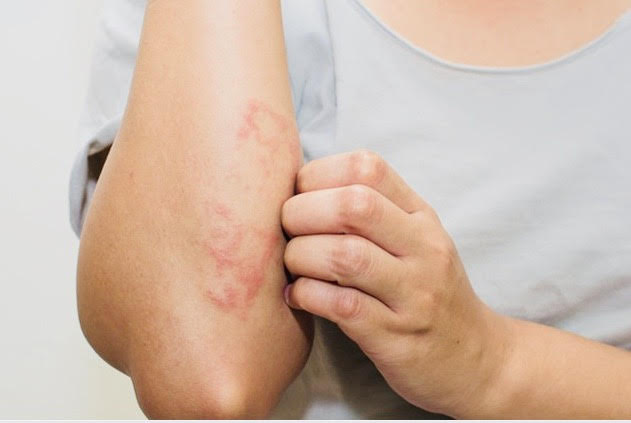
Atopic eczema makes the skin itchy, dry, thickened, red, cracked, and sore. On darker skin tones, inflammation may appear brown, purple, or grey rather than red — an important distinction that is often missed.
The condition typically moves in cycles: flare-up, healing, remission — and then, frustratingly, back again. Flares can strike without obvious reason or be triggered by cold weather, stress, illness, or contact with irritants.
It looks different at different ages. In babies, eczema tends to appear more on convex body areas such as the cheeks (but the nappy area is usually spared). Older children typically develop it in the creases — think inner elbows and behind the knees. Adults may still have these flexural patterns, but often see more involvement of the head, neck, and hands, and sometimes coin-shaped (‘nummular’) patches rather than larger plaques.
Thankfully, many children outgrow eczema before school age. For some it persists until puberty when the skin’s oil glands mature. And for others, it continues into adulthood — or begins there for the first time, which we call ‘late-onset’ eczema.
Treatment: Getting It Right
This is where I see the most confusion — and frankly, the most unnecessary suffering. Eczema treatment isn’t complicated once you understand the principles, but getting the details wrong can make a real difference.
Emollients: The Non-Negotiable Foundation
Regular application of lipid-rich emollients is the single most important thing you can do for eczema-prone skin. Not occasionally, not when it feels dry — at least twice daily, possibly more during flare-ups. This helps stabilize the skin’s barrier function and in turn reduce excessive water loss and inflammation. Also apply emollients when the skin is still damp after bathing or showering to lock in moisture.
A few things I tell my patients:
- Keep applying even when the skin looks fine. The barrier is still impaired during remission. Consistent emollient use reduces the frequency and severity of flare-ups.
- Avoid soap. Use emollient washes and emollient bath additives instead of foaming shower gels and bubble baths. Dermol lotion is excellent as a soap substitute, but I don’t usually recommend it as a leave-on product — it can irritate eczema prone skin.
- Avoid plant ingredients. This may sound counterintuitive, but many plant extracts such as calendula are highly allergenic. They may feel fine now, but the risk of developing an allergy to them later is not worth it.
- Avoid Aqueous cream as a moisturiser. Aqueous cream, many GPs’ favourite, was originally developed as a soap substitute, but it can irritate when left on the skin, as it contains SLS, a detergent, so best to avoid it as an emollient.
For gentle everyday skincare for eczema‑prone skin, I often suggest ranges like La Roche‑Posay Toleriane, Avène Xeracalm, or Bioderma Atoderm, as they are fragrance‑free, barrier‑supportive, and generally well‑tolerated by sensitive, eczema‑prone skin.
Prescription Treatments: Don’t Be Afraid of Them
When eczema is inflamed, emollients alone won’t cut it. This is where prescription anti-inflammatory treatment becomes essential.
Topical steroids are the first line for active flares. I know many patients worry about steroid creams, but short courses used correctly are safe and important — delaying treatment ultimately will increase the total amount of more steroids needed, compared to early treatment. The key mistakes I see are starting too late, using too weak a preparation for the severity, and stopping abruptly rather than tapering gradually. The latter is important to understand – we want to take away the steroid slowly, so that our skin doesn’t notice that we are taking it away, which reduces the risk of rebound. Some patients benefit from intermittent maintenance such as for example ‘weekend therapy’ — applying a steroid on two consecutive days per week as maintenance, which can prevent flare-ups from returning.
Another tip – Steroid ointments tend to be better than steroid creams for eczema. They’re more barrier stabilising and contain fewer preservatives, which means less risk of allergies.
Steroid-free alternatives — There are now steroid free anti-inflammatories available such as Elidel® cream and Protopic® ointment (so-called calcineurin inhibitors). These can be excellent options, particularly for sensitive areas like the face and eyelids where long-term steroid use is best avoided.
For severe cases that don’t respond to topical treatment, there are systemic therapies – not only systemic steroids, but also newer biologics and JAK inhibitors that have transformed outcomes for patients with moderate-to-severe eczema. UV light therapy is another established option for treatment-resistant cases. These all require specialist oversight, which is where seeing a dermatologist makes a real difference.
Can Eczema Be Cured?
The honest answer is — no. Atopic eczema is a chronic condition driven by genetic predisposition, and we cannot change your genes, so we are not able to switch off your tendency to develop eczema. However, we absolutely can manage it well, so that you may be in extended periods of remission. The right combination of daily emollient use, trigger avoidance, and timely prescription treatment when needed can keep most patients comfortable and flare-free for long stretches.
Daily Life with Eczema: Practical Advice
Managing the Itch
The itch-scratch cycle is one of the most distressing aspects of eczema. Itching leads to scratching and scratching perpetuates inflammation, which leads to more itching. It’s a vicious cycle that needs to be interrupted. Scratching also leads to thickened, leathery looking skin (so-called lichenification) and risks infection. The most effective step is getting prescription treatment to break the cycle — over-the-counter products often simply aren’t strong enough for active eczema.
Here are some additional strategies that may help to interrupt the itchy-scratch cycle:
- 100% cotton, or silk clothing next to the skin (never wool, which aggravates eczema – also avoid synthetic fabrics that are not breathable). For babies and toddlers, cotton or silk mittens at night — you can get them integrated into pyjamas.
- Wet wrapping — applying emollients under damp bandages. Many parents find this remarkably effective for children.
- Keep nails short to limit skin damage from scratching.
- Teach the knuckle technique to children: tuck the thumb under, fold the fingers over it, and scratch with the knuckles rather than fingernails. It sounds simple, but it works surprisingly well — it empowers children to scratch in a far less damaging way.
- Cool your emollient in the fridge in summer for instant itch relief when applied (not for babies, though).
Sun and Eczema
Most eczema patients find moderate sun exposure helpful — there’s a reason eczema tends to improve in summer and worsen in winter. UV light has anti-inflammatory effects, and we even use controlled doses of specific types of UV light for resistant cases.
However, it’s a double-edged sword. Cumulative sun exposure increases skin cancer risk, and overheating or sweating can also trigger flares. And it goes without saying that you should strictly avoid burning in the sun. And I must be clear: never use sun exposure to ‘treat’ eczema in babies or toddlers.
Diet and Eczema
There is some evidence that fish oil supplements (Omega-3 fatty acids) and probiotics (‘good gut bacteria’) may offer some benefits, and that exclusive breastfeeding for four months may reduce eczema risk in predisposed infants. Some patients notice certain foods trigger flares — this may be a true allergy or sometimes an intolerance. On that note – make sure you understand the difference between different food related blood tests – true allergy tests test for IgE, while tests looking at IgG levels test for ‘intolerance’ only, and the latter is a highly controversial test. And then there are certain foods like citrus fruit that can irritate eczema on a non-immunological level.
Unfortunately, there is no dietary silver bullet for eczema, and most dietary changes show only marginal benefit, if any, unless you have a true allergy to a food item, in which case you should avoid it. Don’t let anyone convince you that avoiding all those foods your IgG blood test flagged up will control severe eczema — often those ‘intolerance’ tests just reflect what you eat a lot.
Eczema needs proper dermatological expert knowledge and management alongside any lifestyle measures.
Makeup and Eczema
If you have eczema and want to wear makeup, choose products carefully. Fragrance-free is essential, as is avoidance of potentially irritating ingredients. I often recommend Oxygenetix — it’s gentle enough for eczema-prone skin (it’s fine even after chemical peels) and provides good coverage without irritation.
Bathing and Washing
Use emollient soap substitutes for all washing. Keep baths and showers lukewarm (not hot) and limit them to ten minutes max. Add a bath emollient such as Dermol. Then apply your emollient immediately afterwards while the skin is still damp. These small changes can make a significant difference over time.
When to Seek Urgent Help
Most eczema can be managed with the approach above, but there are situations that require prompt medical attention:
- Weeping skin with yellow crusts — this can suggest secondary bacterial infection and may need antibiotics.
- A sudden widespread rash of tiny blisters — this could be eczema herpeticum (cold sore virus spreading on top of eczema), which needs urgent antiviral treatment. Don’t wait on this one.
- Eczema that isn’t responding to treatment — if over-the-counter emollients haven’t helped, it’s time to see a dermatologist for prescription treatment.
How Eudelo Can Help
Eczema is one of the conditions we are very passionate about treating at Eudelo, because the difference proper dermatological care makes is often dramatic. Patients come to us having struggled for years with the wrong approach, and within weeks they’re in a completely different place.
At Eudelo, we offer:
- Expert diagnosis — distinguishing between eczema types, ruling out other conditions, and helping to identify your individual triggers, including true allergy blood testing
- Personalised treatment plans — the right combination of emollients, prescription treatments, and lifestyle adjustments for your specific situation
- Tailored Dermatology Grade Facials — if you want to go for a Facial and are eczema prone, make sure to avoid highstreet and spa facials. Eudelo’s Dermatology Grade Facials (DGFs) can be specifically adjusted to suit eczema-prone skin. A gentle manual treatment combining deep hydration, lymphatic drainage, cryostimulation, and red LED light therapy for its anti-inflammatory effects. Compared to highstreet and spa Facials, our DGFs are much safer for eczema sufferers.
- Paediatric dermatology — several of our dermatologists specialise in treating children with eczema and one of our dermatologists even has a double qualification as a paediatrician and dermatologist – there are very few of those double qualified experts in the country!
If you or your child are struggling with eczema, the first step is a Dermatologist Consultation with one of our specialists. We’ll take the time to understand your skin, your history, and what hasn’t worked — and build a plan that actually does.
Whether you have a medical skin condition which needs treatment or simply want to look your very best, our specialised dermatology team will help you achieve the very best result.