

The Hair Loss Epidemic No One Is Talking About
There is a tsunami of hair loss happening right now in the UK, and it can be truly devastating. Some forms of hair loss — particularly around stress and the menopause — are so common that they are seen as inevitable, something to just put up with. That should not be the case.
If you suffer with hair loss, you may be thinking along the lines of:
“I had much thicker hair in the past.”
“Every time I wash my hair, I get so upset seeing how much I am losing.”
“I can see I am turning into my mother — my hair is thinning!”
“My scalp is much more visible now.”
If any of these sound familiar, don’t waste any more time worrying — take action now, because there is a great deal that can be done.
Evidence confirms that hair loss can be psychologically damaging, leading to low self-esteem, anxiety, depression, or social phobia. It can affect personal relationships, work confidence, and quality of life. You do not have to accept it.
What Causes Hair Loss?
There are various forms of hair loss, which can either be diffuse (thinning all over) or occur in patches. The most common type we see at Eudelo is diffuse, non-scarring hair loss, which can be triggered by:
- Hormonal changes — menopause, post-pregnancy, stopping the contraceptive pill, or PCOS
- Stress — physical or emotional, often creating a vicious cycle as the hair loss itself causes further distress
- Illness — post-infection hair loss (including post-COVID) has surged in recent years
- Nutritional deficiencies — iron, vitamin D, zinc, and other micronutrients
- Medications — certain drugs can trigger or accelerate hair shedding
- Genetic predisposition — androgenetic alopecia affects both men and women
- Autoimmune conditions — alopecia areata and other inflammatory types
One important thing to understand: hair loss typically appears two to four months after the trigger event, due to the length of the natural hair cycle. This delay often makes it difficult to identify the cause. And you may lose 30–50% of your hair volume before it becomes visibly noticeable — by the time you notice thinning, the process has been underway for some time.
The Hormonal Connection
In women, the triad of excess facial hair (hirsutism), diffuse hair loss on the scalp (often worse in the crown area), and acne breakouts often appear together, because they share the same underlying hormonal cause — a relative excess of male hormones (androgens such as testosterone). This hormonal shift happens during menopause as oestrogen and progesterone decline, but can also occur with PCOS or after stopping hormonal contraception.
Crucially, normal hormone blood levels do not exclude hormonal hair loss. The hair follicles themselves can be more sensitive to circulating androgens, which is why expert diagnosis matters.
Can Medications Like Ozempic Cause Hair Loss?
In the majority of cases, hair loss caused by Ozempic and similar weight loss drugs is temporary and reversible (a type called telogen effluvium). However, in rare cases, hormonal changes triggered by rapid weight loss may accelerate androgenetic alopecia, which can be more persistent. This is rare and not the norm, but worth being aware of if you are on these medications.
Why You Need a Dermatologist, Not a Trichologist
In the UK, the term ‘trichologist’ is not a protected title — technically, anyone can call themselves one. Even accredited trichologists hold only a diploma, obtained through what is essentially a part-time distance-learning course. They do not have a medical degree and cannot prescribe the medical treatments that are often essential for effective hair loss management.
The most qualified doctor to diagnose and treat scalp and hair conditions is a Dermatologist. Hair loss can be caused by underlying diseases, whether scalp-related or internal, so any form of hair loss must be diagnosed properly by a medical professional first.
This is especially important because certain autoimmune forms of hair loss can be scarring — meaning that once the hair follicle has scarred over, there is no reversing it. Early diagnosis and treatment by a Dermatologist can make all the difference.
How Eudelo Treats Hair Loss
At Eudelo, we have a 360-degree approach to treating hair loss. We understand that one size does not fit all — every patient’s hair loss has different causes and responds to different treatments.
Diagnosis First
Everything starts with an expert medical consultation and examination with one of our Dermatologists. We may recommend blood tests to check for internal causes (thyroid function, iron, vitamin D, hormonal levels), and in many cases a genetic hair loss profile — a simple cheek swab sent to a specialist lab that analyses multiple genetic variations across metabolic pathways related to hair loss.
The genetic test is particularly valuable because it can predict your response to treatments like minoxidil. Research shows that minoxidil only works for about 40% of people, due to genetic variations in the SULT1A1 enzyme that processes the drug. Rather than wasting months on a treatment that may not work for you, we can find out in advance.
Personalised Treatment Packages
After diagnosis, we put together a personalised treatment plan that addresses the problem from all angles. Treatments may include:
- Prescription scalp tinctures — custom-compounded formulations combining ingredients such as minoxidil with topical anti-androgens, tailored to each patient. These are made specifically for you by our compounding pharmacy partner.
- Oral medications — where appropriate, anti-androgen medications that help combat hormonal hair loss by reducing the effects of testosterone and DHT on hair follicles
- PRP (platelet-rich plasma) — using growth factors from your own blood to stimulate hair follicle activity
- Exosome treatment — advanced regenerative therapies that promote hair growth at the cellular level
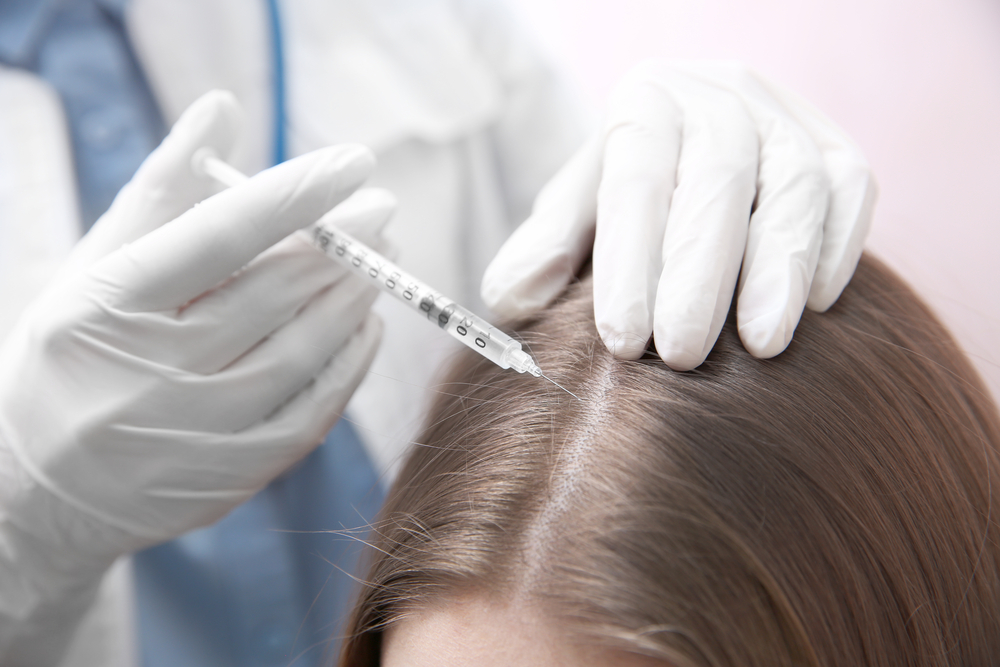
- Mesotherapy — microinjections of vitamins, minerals, and growth factors directly into the scalp
- Cryo-stimulation — cold therapy to boost scalp circulation and reduce inflammation
- Low-level laser light therapy — a take-home device for daily use that stimulates follicular activity
- Targeted supplements — addressing any nutritional gaps identified in blood work
We put together a symbiotic package that works in concert for each individual patient, because the whole is greater than the sum of its parts. The combination of clinic-based treatments with daily at-home protocols delivers results that no single intervention could achieve alone.
Why Act Now?
Even if you feel that your hair loss is not that bad now, it is best to see an expert early. Getting diagnosed as early as possible is important for two reasons: first, treatment is more effective the sooner you start. Second, certain autoimmune forms of hair loss can cause permanent scarring of the hair follicle — once that happens, regrowth is no longer possible.
At Eudelo, we can achieve significant regrowth in the majority of hair loss sufferers, if done as we recommend. Don’t put up with it — take action.
Book Your Consultation
If you are concerned about hair loss, our Dermatologists are available to provide expert diagnosis and a personalised treatment plan. Book a Discovery Call on 020 7118 9500 or email reception@eudelo.com, and our team will be able to help you from there.
Whether you have a medical skin condition which needs treatment or simply want to look your very best, our specialised dermatology team will help you achieve the very best result.