
Skin Tag Removal in London
“Our clinic's work reflects the rigorous German ethic: honest and high quality, with creative attention to detail and an emphasis on safety. Realistic and never overdone.”






Skin Tag Removal in London
What Are Skin Tags?
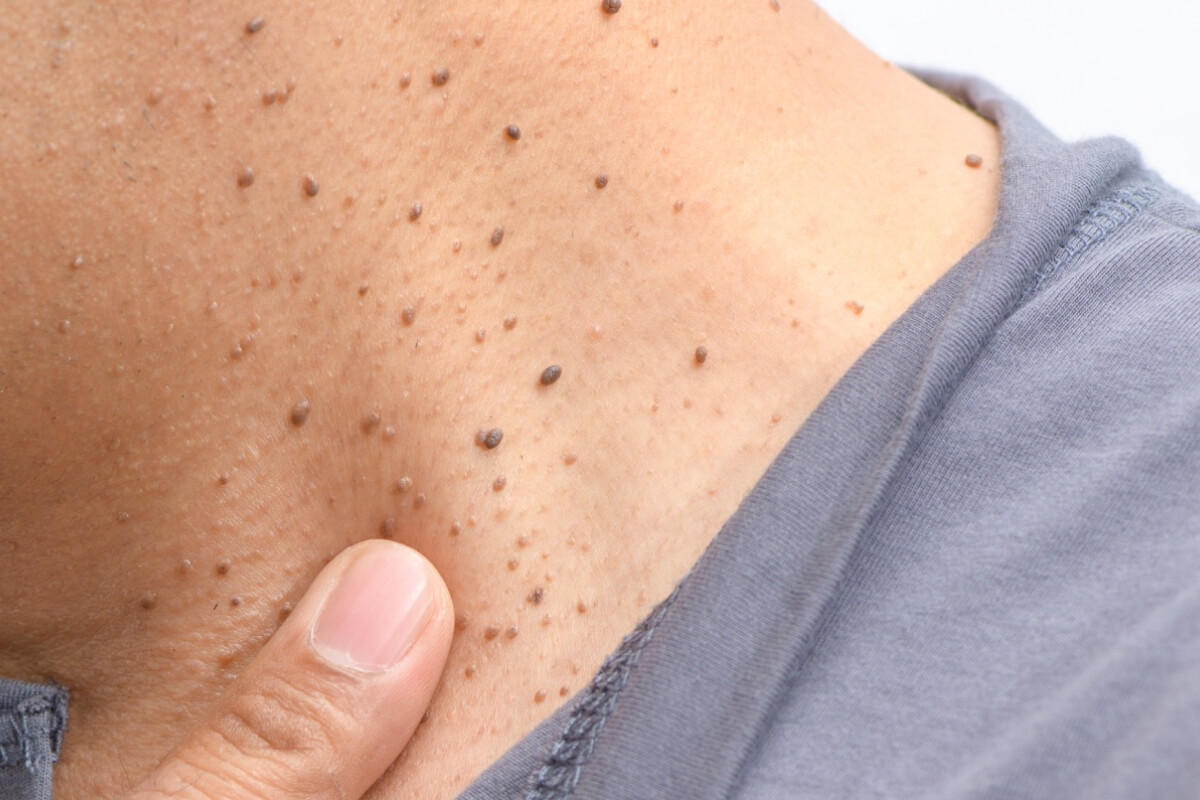
Skin tags (also called acrochordons) are soft, harmless growths that may sit close to the skin or hang from a small stalk. They often appear where skin or clothing rubs, including the neck, eyelids, underarms, beneath the breasts and around the groin. They can be skin-coloured or darker and may appear alone or in groups.
Skin tags can form for a variety of reasons, including friction. This could be as a result of skin rubbing against skin, but also when skin constantly rubs against jewellery or clothing. Individuals with loose skin, women who are pregnant, and those who are overweight or suffering with diabetes are at a higher risk of developing skin tags.
While skin tags are harmless, most people seek out skin tag removal for aesthetic reasons. However, there are some instances where a skin tag should be removed for functional or even medical reasons. For example, skin tags may catch on clothes, get irritated or bleed, while skin tags on the eyelid may interfere with the patient's vision. In other cases, a skin tag needs removal for diagnostic reasons, to make sure we are not overlooking a more worrying type of growth.
Small growths are not always easy to identify at home. A wart, mole or other lesion can sometimes resemble a skin tag, so we assess suitability before treatment and arrange a Dermatologist review whenever the diagnosis is not clear.
Our Approach
Eudelo combines medical and aesthetic dermatology under one roof. That matters for skin tags because a straightforward cosmetic concern and a growth that needs medical assessment should not be treated as though they are the same thing.
At Eudelo we offer both surgical removal (for bigger skin tags), cryotherapy (this involves freezing the skin tag, so it falls off), and ACP (‘Advanced Cosmetic Procedure’ or electrolysis, which uses a small electrical current to ‘zap’ them away).
Your treatment plan is based on the tag itself, not a one-size-fits-all menu.
If the growth is changing, painful, repeatedly bleeding or not typical of a skin tag, we will advise medical assessment rather than proceeding with cosmetic removal.
Want to find out more?
Assessment Comes First
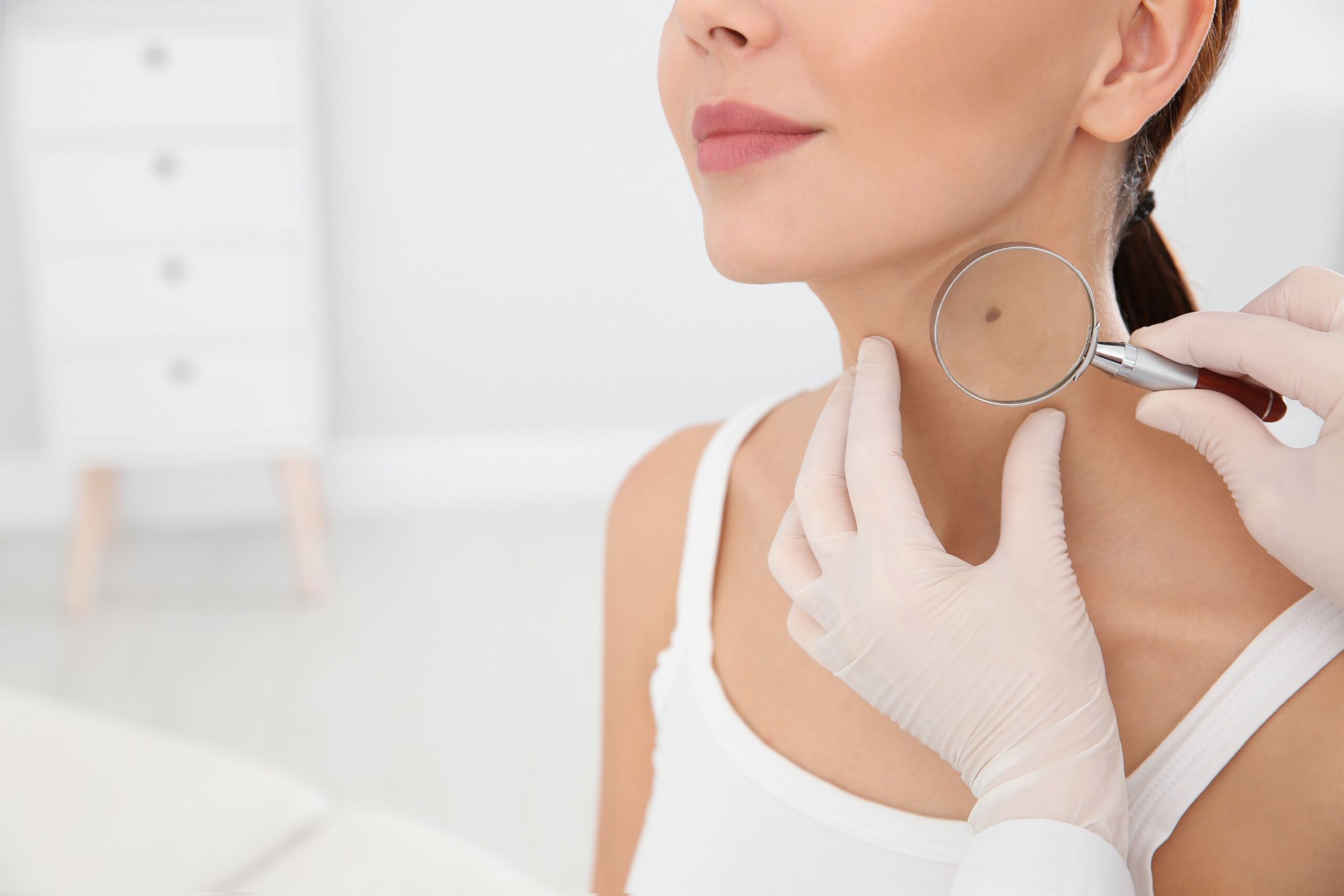
Before removal, we look at the number of tags, their size, colour, attachment and location. We also check whether the growth has changed, become painful or bled without being caught or irritated.
For a typical, cosmetically bothersome skin tag, the next step may be a simple procedure with an appropriately trained practitioner. If there is any diagnostic uncertainty, or the lesion is in a particularly delicate position, we will route you to the right medical assessment first.
This protects your skin and avoids treating the wrong type of lesion. It also lets us give you a realistic explanation of the likely result, recovery and costs before you decide whether to proceed.
Skin Tag Removal Options
ACP for suitable smaller tags. ACP uses a fine electrolysis probe and a controlled electrical current. It is a precise option for suitable small to medium skin tags and is performed by an appropriately trained practitioner.
Medical removal for larger tags. A larger or more firmly attached tag may be better suited to curettage or a surgical shave under local anaesthetic. The clinician will explain whether tissue should be sent for laboratory analysis.
Cryotherapy in selected cases. Freezing can be suitable for some lesions, but it is not the best option for every tag or every skin type. We choose the method after assessment rather than asking you to select a procedure yourself.
What to Expect
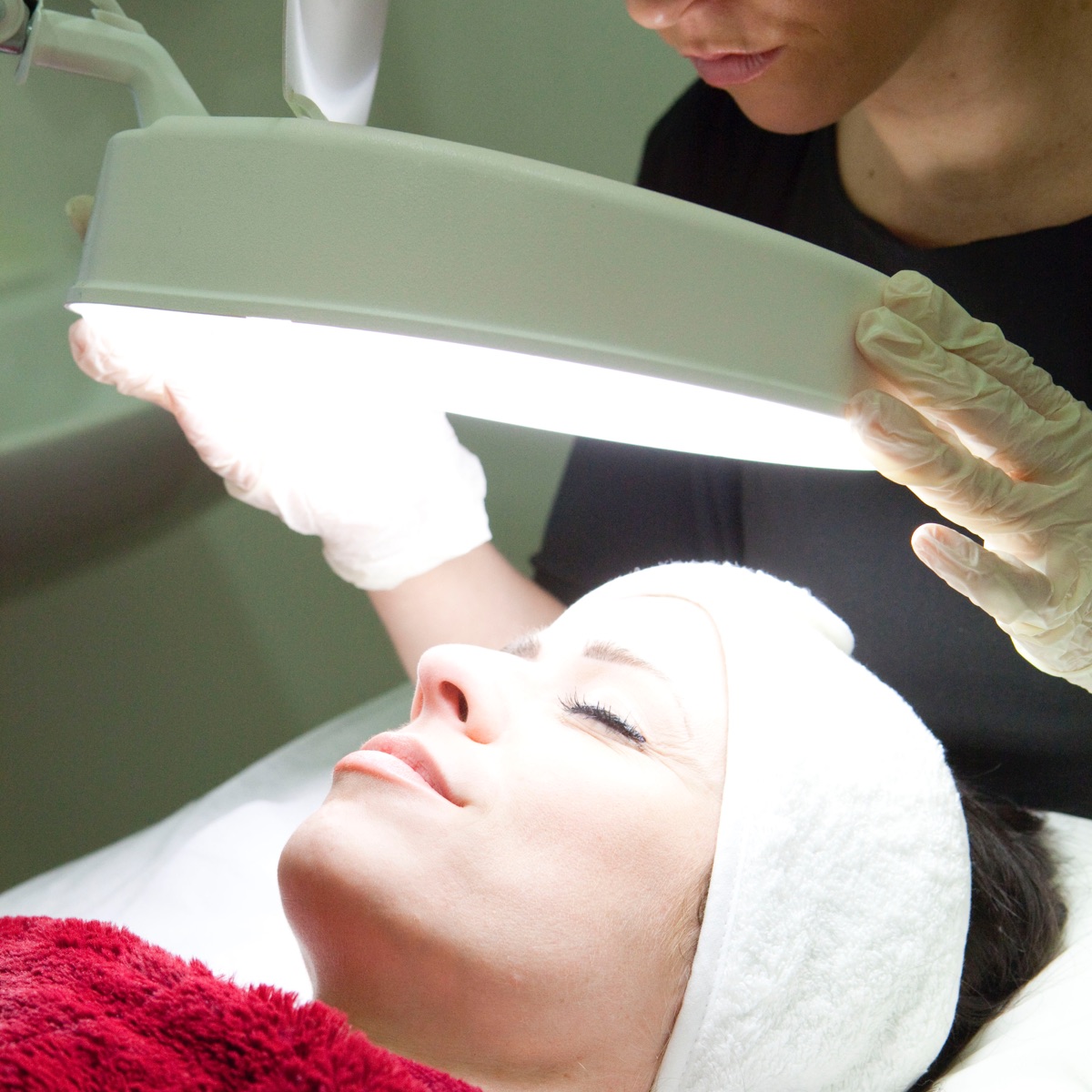
Your practitioner will explain the chosen technique, expected healing and the risks that apply to your skin and the lesion's location. For surgical removal, the doctor will use local anaesthesia. A prescription-strength numbing cream may be used for ACP where appropriate. Sensations vary, but you may feel brief heat, stinging or pressure during treatment.
Afterwards, the area can be red, tender or slightly swollen, and a small scab may form. After your skin tag has been removed, we will advise you of any steps you can take afterwards to help aid the fast recovery of your skin. Avoid picking or attempting to speed up healing, as this can increase the chance of infection, scarring or a change in pigmentation.
Please do not cut, burn, freeze or tie off a suspected skin tag at home. Apart from the risks of bleeding and infection, a different type of lesion can easily be mistaken for a skin tag.

Your Next Step
Discovery Call

5 reasons to discover Eudelo today
- Medical and aesthetic skin expertise under one roof
We can distinguish a straightforward cosmetic concern from a lesion that needs medical assessment. - The method is matched to the tag
Size, attachment and location guide whether ACP, medical removal or another approach is most suitable. - Multi award-winning, CQC-registered dermatology clinic
Your care takes place in a clinical environment with safety at its centre. - Clear expectations before treatment
We explain the likely result, recovery, relevant risks and costs before you decide. - An easy, no-pressure first step
Book a complimentary Discovery Call and our team will help route you to the right appointment.
our Doctors Are Proud Members Of